A storefront concept for the Rail Cube magnetic monorail toy
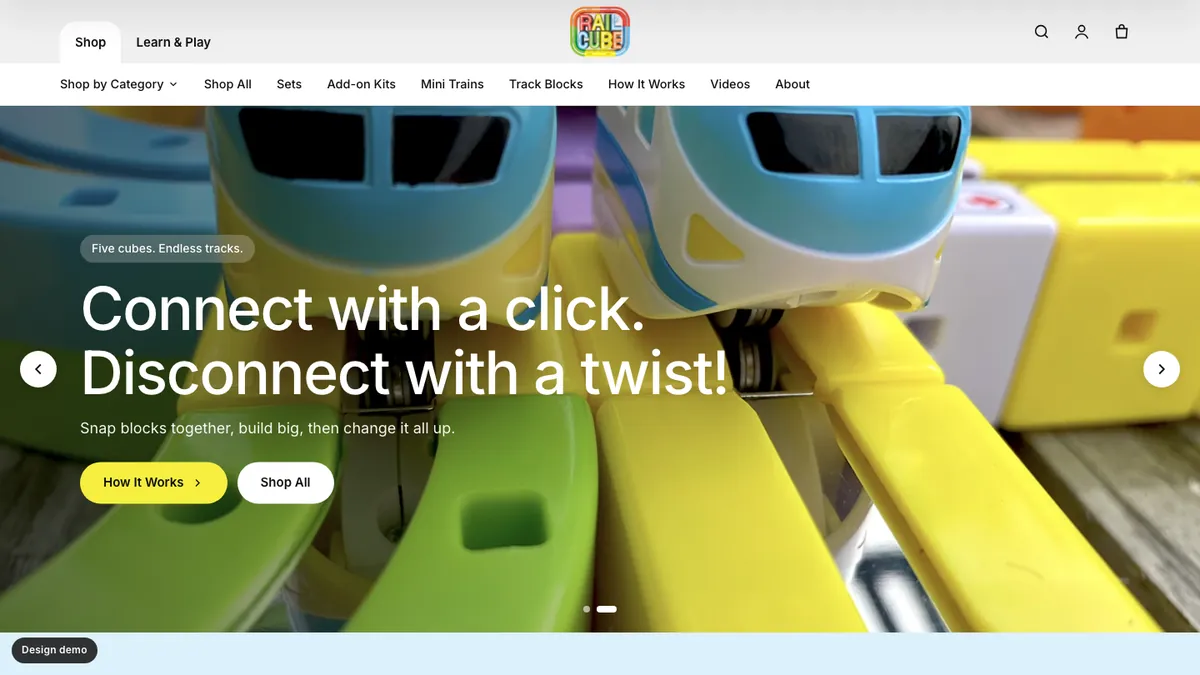
Rail Cube is a magnetic monorail STEAM toy sold through Meekins. We built a concept storefront as a proposal to show how the full product line could be presented and shopped. Rail Cube is not a client, and the brand's real store is separate.
This is a concept redesign and audit we built as a proposal. Rail Cube is not a client, and the demo is not their live site.
- Brand
- Rail Cube
- Industry
- STEAM toys
- Status
- Concept and audit, not a client
- Built
- Nov 2026
- Stack
- Node.js static build, Cloudflare Pages
What we found
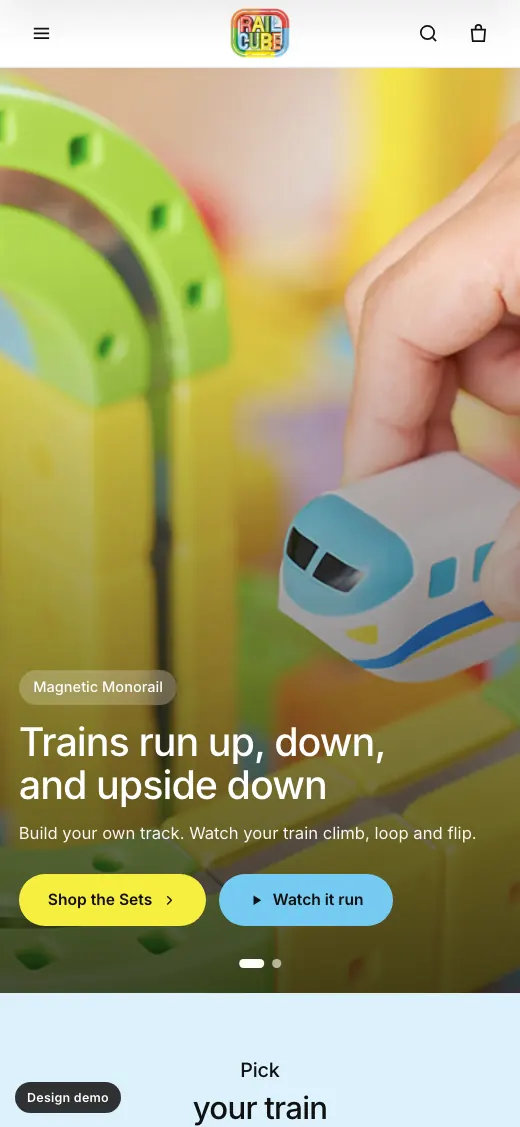
Rail Cube trains run up, down and upside down on magnetic track blocks. The line spans starter and deluxe sets, add-on kits, mini trains in four colors, single track blocks, extras and classroom sets. That is a lot for a shopper to sort through.
We wanted to show what a storefront could look like if every product came from one catalog, so sets, kits and parts sit side by side and shoppers can filter to what they need. This is a concept we built on our own as a proposal. The brand's real store is separate, at railcubetoys.com.
What we did, step by step
- Mapped the product lineWe organized the line into 6 categories: Sets, Add-on Kits, Mini Trains, Track Blocks, Extras and Classroom Sets.
- Built one product catalogEvery product, with its SKU, price, badges and image gallery, lives in one data file that the whole site reads from.
- Wrote a small static site generatorA Node.js build script turns the catalog into the full site, so adding a product means adding one entry.
- Generated the pagesThe build outputs 6 core pages (home, shop, about, learn, videos, contact) and 15 product detail pages.
- Added shopping toolsThe shop page filters by category, and mini train pages switch between color variants with swatches.
- Brought in videoProduct videos from YouTube are embedded so shoppers can see the trains climb and loop before they buy.
- Styled it like a toy storeWe used a bright, playful look with a hero slider and a pastel color for each category.
- Deployed as a private previewThe demo runs on Cloudflare Pages with a noindex header so it never competes with the brand's real store in search.
What's on it
- Home page with a hero slider
- Shop page with category filters
- 15 product detail pages with image galleries
- Color swatches for the mini train variants
- Embedded YouTube product videos
- Learn and videos pages for parents and teachers
- Classroom set category for schools
- Free-shipping threshold message
Search and local setup
- Homepage title and H1 written around what the toy does
- Clean product URLs generated from the catalog
- Category filter URLs on the shop page
- Whole demo sent with a noindex header on purpose, since it is a concept and not the brand's store
Questions people ask about this work
Is this the official Rail Cube store?
No. This is a concept storefront we built as a proposal, and Rail Cube is not a client. The brand's real store is separate, at railcubetoys.com, and the demo is set to noindex so it does not show up in search.
How do you build a storefront for a toy with lots of add-on parts?
Put every product in one catalog with its category, SKU, price and photos, then generate the pages from it. In this concept, sets, add-on kits, mini trains, track blocks and classroom sets all come from the same data, and the shop page filters by category.
Can a static site work for a small product catalog?
Yes, for a line this size it works well. Our build script turns the catalog into 6 core pages and 15 product pages that load fast on Cloudflare Pages. A cart or checkout can be connected later without rebuilding the catalog.
Services in this project
Related projects
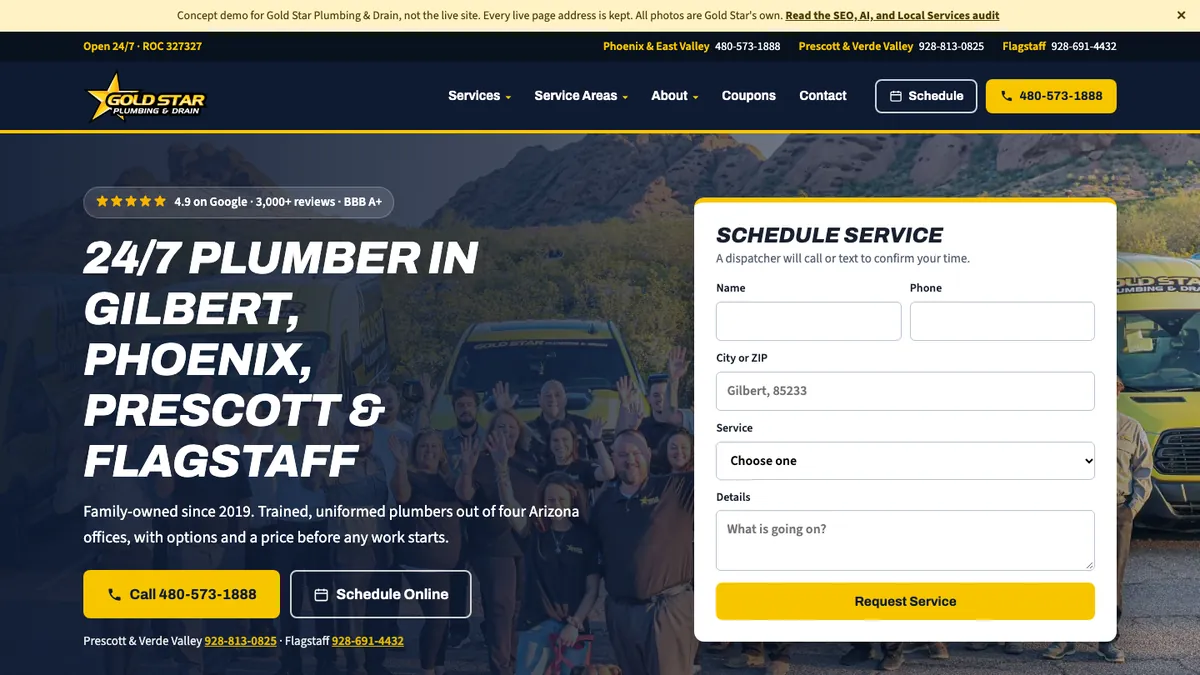
Gold Star Plumbing & Drain
Gold Star Plumbing & Drain is a family-owned 24/7 plumber with four Arizona offices.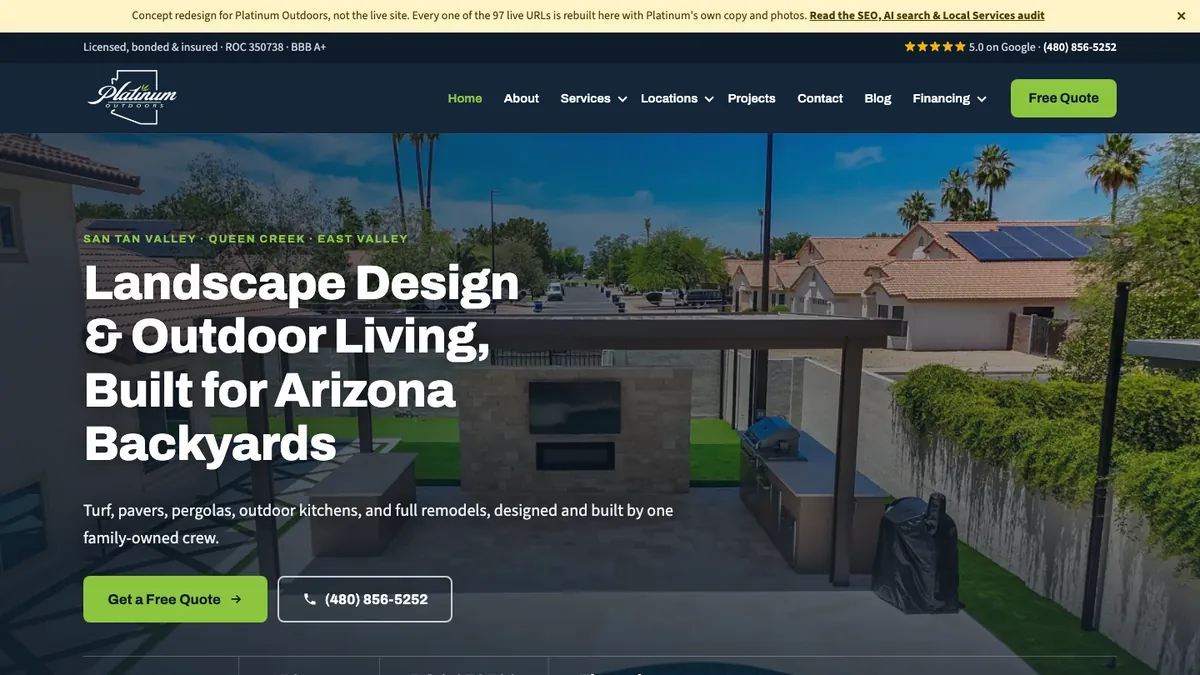
Platinum Outdoors
Platinum Outdoors is a family-owned landscape design and outdoor living contractor based in San Tan Valley, AZ. Built and written up by John M. Williams, founder of It All Started With An Idea in Queen Creek, AZ. 15+ years and $350M+ in managed ad spend.